Focused travel guide
Wat Phnom Rebuilding: Why the Temple Looks Newer Than Its Legend
The Lady Penh story reaches back to the fourteenth century, but the visible sanctuary is the product of later rebuilding. The present temple should not be described as an untouched structure from the founding legend.
See Wat Phnom on Google Maps ↗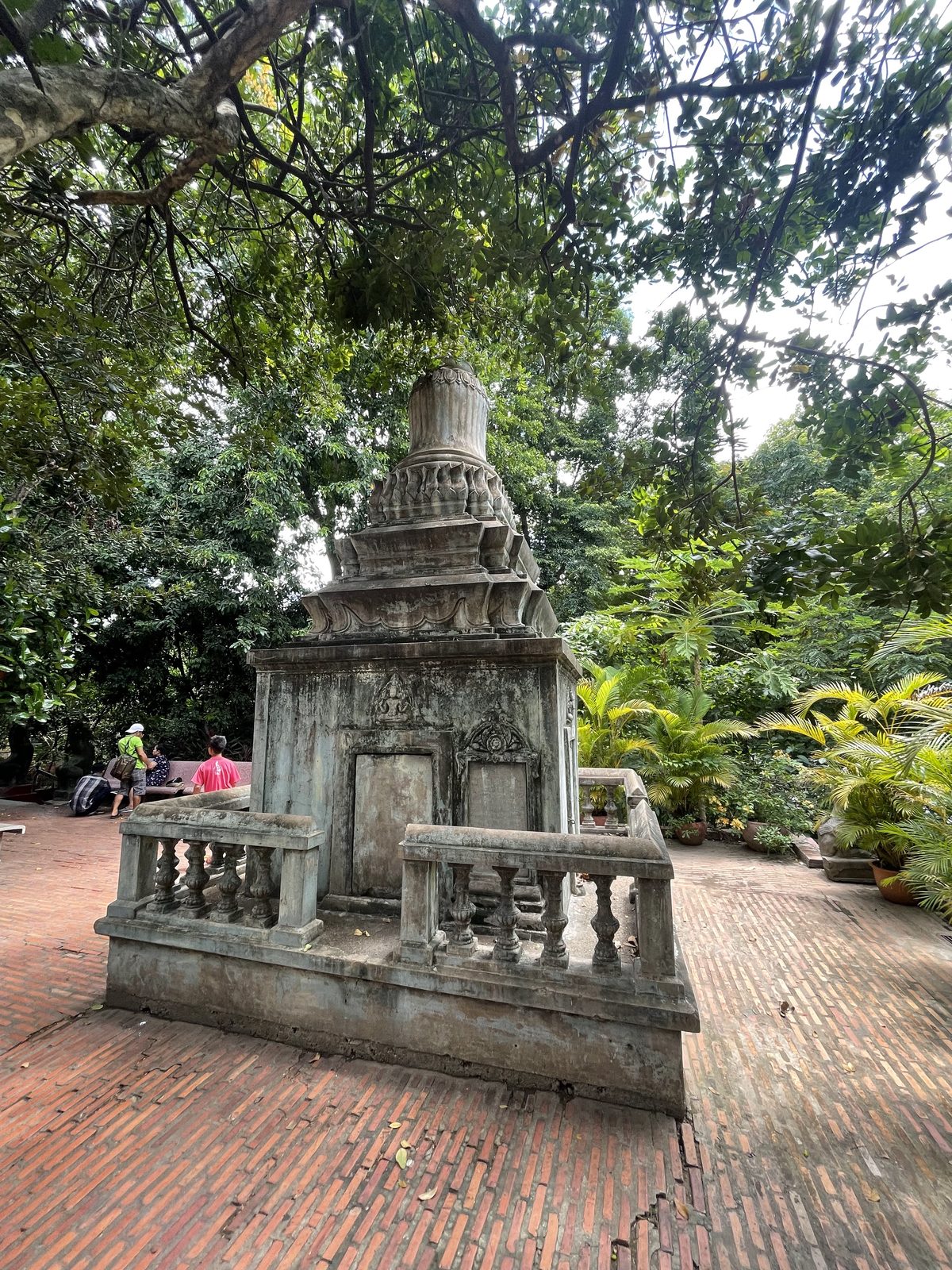
About Wat Phnom and its care
Wat Phnom is an active Buddhist temple and a historic public landmark. The sanctuary remains a place of worship; its hill and surrounding roads are also used by local residents. Follow the instructions of those responsible for each space, and respect people conducting prayers.
At a glance
- Location
- Wat Phnom Road, Daun Penh, Phnom Penh 12000, Cambodia · HWGF+F6
- Visiting hours and admission
- Check the entrance notice on the day of your visit; published schedules and visitor-category fees may change.
What to notice
A major reconstruction is commonly dated to 1926, following earlier changes. Compare roof tiles, ornament, painted surfaces and steps to see how active religious architecture can be renewed while a site retains older cultural meaning.
How to explore this topic
Use the hill’s historic associations as context, then describe features you can actually see. Avoid assigning a precise medieval date to individual carvings without an on-site inscription or reliable source.
Suggested sequence
- Start at a safe approach to the hill and locate the public stairs.
- Explore the feature described in this guide without interrupting worship.
- Compare it with the main sanctuary, Lady Penh shrine and memorial stupa.
- Return to the base and open a separate map destination for any onward stop.
Frequently asked question
Is Wat Phnom entirely a fourteenth-century building?
No. Its traditional origin is older than much of the fabric visible today; the sanctuary was repaired and rebuilt in later periods.
Visitor reviews
For the current rating and full original reviews, refer to the Google Maps place listing. Review figures change over time.
Google Maps ↗